
Keeping weight off on a GLP-1: your maintenance guide
From the Belle care team · Updated
Goal reached. Now let's keep it.
Reaching your goal is a big deal. Keeping it is its own skill. This guide explains what maintenance is, the different ways it can look on a GLP-1, and the habits that help your results last.
- Maintenance is a phase, not a finish line. Your plan keeps going. It just has a new goal.
- There is more than one way to do it. The same dose, a lower dose, or more time between doses.
- Some hunger coming back is normal. Food is fuel, and your body needs more of it now.

Three numbers to remember
| Number | What it means |
|---|---|
| 3 to 5% | A common maintenance range around your goal weight. Small ups and downs inside it are expected. |
| 2 to 4 lb | How much your weight can swing day to day from water, salt, hormones and bowel habits. It is not fat. |
| Weekly | How often most people who keep weight off long term check their weight. It catches a drift early. |
Ready to start maintenance with Belle? See Reaching your goal weight: how maintenance works at Belle for how to tell us and what happens next.
Part 1: Maintenance or plateau?
A plateau is a pause. Maintenance is a plan. On the scale, both look the same: your weight stops moving. The difference is where you are and what comes next. A plateau happens before you reach your goal. Maintenance starts once you and your care team agree you are there.
| Plateau | Maintenance | |
|---|---|---|
| What it is | Your weight stalls before your goal | You are at your goal, and holding |
| What it looks like | Your weight has stayed about the same for 4 weeks or more, and you still have weight you and your care team want to lose. It often happens as your body adjusts to a lower weight. | You reached a weight that feels healthy and doable for you. Your aim shifts from losing weight to keeping it off. Your weight moves up and down inside a small range. |
| Next step | Review your habits, dose and labs with your care team. | Choose a maintenance plan with your care team (see Part 2). |
Stuck before your goal? Read Weight loss plateaus on a GLP-1: why they happen and what helps.
Part 1: Why maintenance matters
Your body pushes back. That is not a failure. After weight loss, your body works to win the weight back. Hunger goes up and you burn a little less energy. This is biology, not willpower. It is why obesity is treated as a long-term condition, and why maintenance needs a plan.
- Hunger hormones rise. Levels of hormones that make you hungry go up after weight loss and can stay up for a year or more.
- Fullness signals fade. Hormones that tell your brain you have had enough drop, so it takes more food to feel satisfied.
- You burn a bit less. A smaller body needs less energy, and losing muscle lowers it further. Strength training helps.
- Old habits creep back. Stress, travel, holidays and busy weeks can slowly pull routines off track without you noticing.
What happened when people kept going, or stopped
In two large studies, people first lost weight on a GLP-1. Then some kept taking it and some were switched to a placebo (a shot with no medicine) without knowing. People who kept taking their medicine kept losing or held steady. Most people who switched to the placebo regained a good part of the weight they had lost. In another study, people had regained much of their weight one year after stopping.
If you are thinking about stopping
- Talk with your care team first and make a plan together.
- Keep your protein, strength training and movement strong.
- Weigh in weekly, and agree ahead of time on when to restart.
Part 2: Your maintenance options
Maintenance is not one dose. It is your dose. There is no single maintenance dose that works for everyone. Your care team looks at your weight, hunger, side effects and health to find what keeps you steady. These are the most common approaches. All dosing decisions are made with your care team.
| Option | What it means | Often a fit when |
|---|---|---|
| Stay on the same dose | The dose that got you to your goal may be the one that keeps you there. This is how most maintenance studies were done. | Weight creeps up on less, or the medicine also helps blood sugar, blood pressure or other health conditions. |
| Lower your dose | Step down to a smaller dose, then watch your weight and hunger for several weeks. Some people hold steady on less. | Side effects are bothering you, or your appetite stays quiet and your weight is stable. |
| Space out your doses | Keep a dose that works, but allow more time between doses. Some people find this still keeps hunger in check. | You want to take it less often, and your hunger stays steady until your next dose. |
How a change usually goes
- Change one thing. Either the dose or the timing, not both at once.
- Watch the trend. Weigh in weekly and note your hunger for at least a month.
- Check in. Share your weight, hunger and side effects with your care team.
- Keep or go back. Stay if you are steady. Return to what worked if you are not.
Never change your dose or timing on your own.
Part 3: When hunger returns
Hunger is back. Your GLP-1 is still working. Many people worry when hunger comes back in maintenance. They think their medicine stopped working. Often, it is the opposite. Food is fuel, and your body is asking for enough of it to hold your weight, not lose it.

Use a hunger scale
Rate your hunger from 1 to 10. Eat around 3 or 4. Stop around 6 or 7.
| Number | How it feels |
|---|---|
| 1 to 2: Starving | Shaky and easy to overeat |
| 3 to 4: Hungry | A good time to eat |
| 5: Neutral | In between |
| 6 to 7: Satisfied | A good time to stop |
| 9 to 10: Stuffed | Uncomfortable, and you may feel sick on a GLP-1 |
Normal hunger: your body asking for fuel
- Builds slowly, around your usual meal times.
- Goes away after a balanced meal with protein.
- Your weight stays inside your range.
Next step: eat regular meals, protein first, and keep going.
Worth a check-in: signs your plan may need a tweak
- Food noise (constant thoughts about food) is loud again for most of the day.
- Hunger comes back days before your next dose.
- Your weight stays above your range for 2 weeks or more.
Next step: message your care team. Do not change your dose on your own.
Part 4: Nutrition
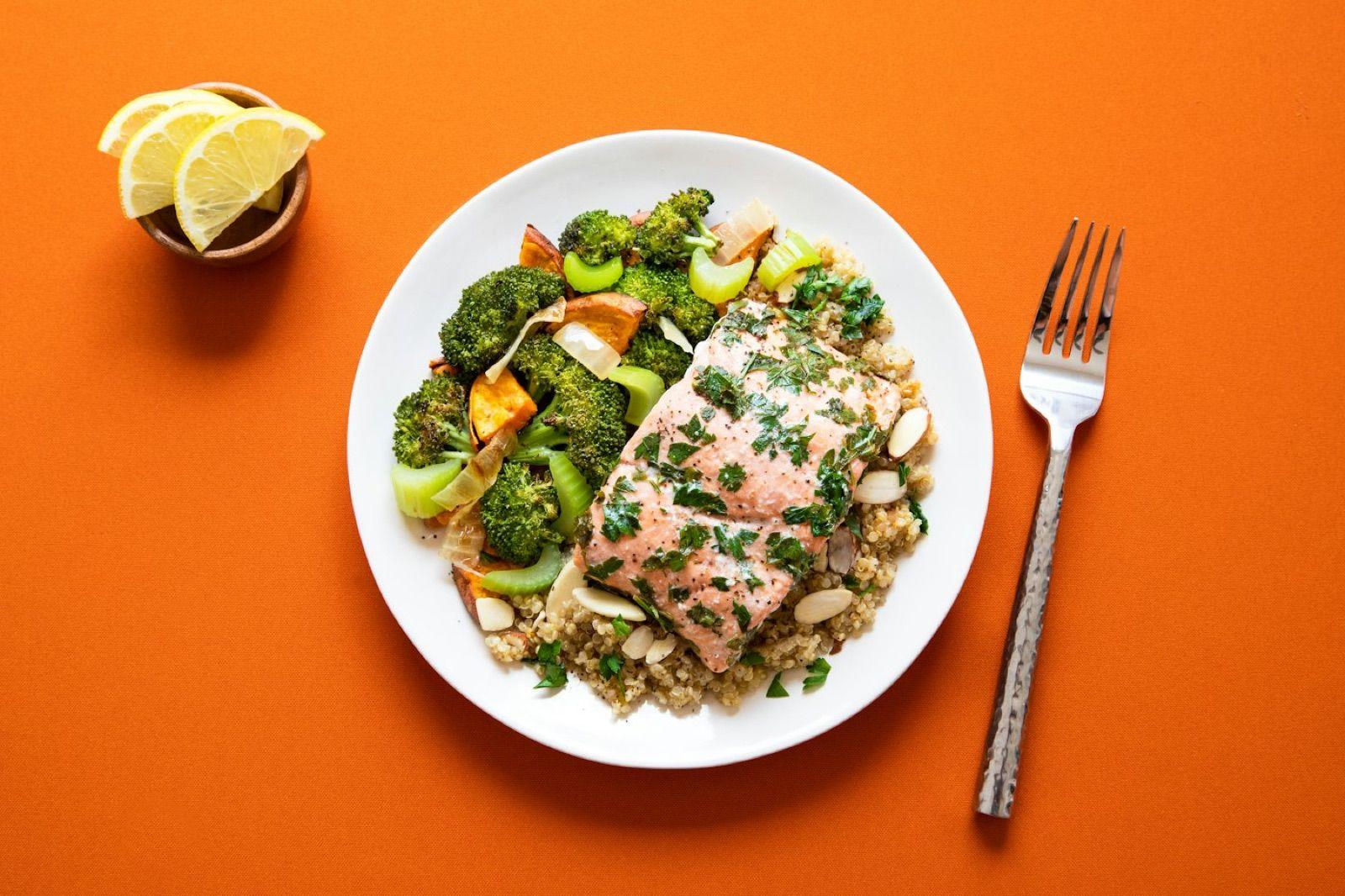
Eat for the long run, not for a deadline. The habits that help you keep weight off look a lot like the ones that helped you lose it, with a little more food and a lot more flexibility. Aim for an eating pattern you could follow for years.
| Daily target | Amount |
|---|---|
| Protein | 25 to 30 g a meal |
| Fiber | 25 g a day |
| Fluids | 64 oz a day |
- Eat enough. Under-eating in maintenance can backfire. It costs you muscle and sets you up for strong hunger later. Regular meals make hunger easier to manage.
- Keep protein at every meal. Protein keeps you full longer and helps you hold on to muscle. Spread it across breakfast, lunch and dinner.
- Make room for foods you love. Mostly whole foods, with room for treats. Rules that are too strict are hard to keep for years.
- Plan for real life. Holidays, travel and weekends will happen. Plan ahead, enjoy the meal, and get back to your routine at the next one.
- Watch drinks and alcohol. Sweet drinks and alcohol add up fast and slip past fullness signals. Water, sparkling water and unsweetened tea are best.
- Notice the drift. Portions and snacks can grow slowly. If your weight trends up, track your food for a few days to see what changed.
Protein ideas
- 3 oz chicken or fish (about 22 to 26 g)
- 3/4 cup Greek yogurt (17 g)
- 2 eggs (12 g)
- 1/2 cup cottage cheese (12 g)
- A protein shake (20 to 30 g)
Part 4: Strength training and movement
Muscle is your maintenance engine. Muscle burns more energy than fat, even at rest, and it helps you hold on to the results you worked for. Regular movement is one of the habits most closely linked to keeping weight off.

- Lift 2 to 3 days a week. Work the big muscles: legs, hips, back, chest and arms. Keep making it a little harder over time.
- Move most days. Aim for at least 150 minutes a week. Many people who keep weight off long term move about an hour a day, often by walking.
- Sit less. Steps, stairs, standing and short walks after meals all count. They add up more than you think.
New to strength training? See How do I keep my muscle while losing weight? and the starter routine in Losing weight slowly on a GLP-1.
Beyond the scale
- Sleep 7 or more hours. Short sleep raises hunger and cravings the next day.
- Have an outlet for stress. A walk, a friend or a few deep breaths before you reach for food.
- Track more than weight. Your waist, your strength and how clothes fit.
- Stay connected. Keep your check-ins with your care team, even when things are going well.
Your maintenance plan, step by step
Use these steps as you reach your goal and settle in. Your care team will help you shape each one around you.
- As you near your goal, agree on your goal range. Pick a healthy range with your care team, not one exact number. Decide how far above it you would go before changing your plan.
- With your care team, choose your maintenance approach. Stay on the same dose, lower it, or allow more time between doses. Staying on the dose that worked is a good option, too.
- After any change, change one thing, then watch. Weigh in weekly and note your hunger. Judge the trend over a month or more, not a single day.
- Every day, keep the habits that got you here. Protein first, enough food, strength training 2 to 3 times a week, daily movement, and 7 or more hours of sleep.
- If your weight climbs above your range, reach out early. Message your Belle care team. A small regain is easier to turn around, and going back to what worked is always an option.
Need to reach us? See how to contact Belle.
Related guides
- Reaching your goal weight: how maintenance works at Belle
- Weight loss plateaus on a GLP-1: why they happen and what helps
- Losing weight slowly on a GLP-1: why it happens and what helps
- Hair loss on a GLP-1: why it happens and what helps
- Nausea on a GLP-1: why it happens and what helps
- Constipation on a GLP-1: why it happens and what helps
- Heartburn and acid reflux on a GLP-1: why it happens and what helps
- Injection site reactions on a GLP-1: what is normal and what helps
More in GLP-1
- Losing weight slowly on a GLP-1: why it happens and what helps
- Nausea on a GLP-1: why it happens and what helps
- Weight loss plateaus on a GLP-1: why they happen and what helps
- Why does my medication look different between shipments?