
Hair loss on a GLP-1: why it happens and what helps
From the Belle care team · Updated
Shedding more hair? It is usually temporary.
Some people notice extra hair in the shower or on their brush a few months into a GLP-1. This guide explains what causes it, when to expect it, how to keep it to a minimum, and what treatments can help if you need them.
- Your medicine is not attacking your hair. The shedding comes from fast weight loss and eating less.
- It shows up late. Most shedding starts 2 to 4 months after you start or raise your dose.
- Your hair grows back. This type of shedding does not cause bald spots and it does not last forever.

Part 1: Why it happens
It is not your medicine. It is the weight loss. The hair loss people see on a GLP-1 has a name: telogen effluvium (TEL-oh-jen ef-FLOO-vee-um). It is a type of shedding that happens after your body goes through a big change or stress.
Losing weight quickly and eating a lot less are both big changes. The same kind of shedding happens after weight loss surgery, crash diets, having a baby, a high fever or a major illness. There is no good evidence that GLP-1 medicines damage hair follicles (the roots that grow each hair) on their own.
- Fast weight loss. Your body reads quick weight loss as a stress, even when it is a healthy change.
- Too little food or protein. Hair is made of protein. When you eat very little, your body sends what it has to your heart, muscles and organs first. Hair is last in line.
- Low nutrients. Low iron, vitamin D, zinc or B12 can add to shedding. Smaller meals make these easier to miss.
How your hair cycle gets thrown off
- Most hairs are growing. At any time, about 9 out of 10 hairs on your head are in a growing phase. This phase lasts for years.
- A stress flips the switch. Fast weight loss or eating too little pushes many hairs to stop growing and move into a resting phase all at once.
- Resting hairs wait about 3 months. Nothing looks different during this time. The hairs stay put while new hairs start forming under them.
- Then they fall out together. The new hairs push the old ones out. That is why the shedding comes in a wave, months after the change that caused it.
Part 2: What to expect
What you see today started months ago. Telogen effluvium runs on a delay. The worst of the shedding often shows up 3 to 6 months after you start your GLP-1 or change your dose. So your hair is not a picture of what is going on in your body right now. It shows what happened a few months back.
A typical shedding wave rises after you start or raise your dose, peaks around months 3 to 4, and then falls back to normal. Hair is usually fuller again by 12 to 18 months. Everyone's timing is a little different, and each dose increase can start a new, usually smaller, wave.
- Months 0 to 2: quiet. Hairs switch into resting mode, but nothing falls out yet. Most people notice no change.
- Months 2 to 4: shedding starts. You see more hair in the shower drain, on your pillow or in your brush. The roots may have a small white bulb. That is normal for resting hairs.
- Months 3 to 6: the worst of it. Shedding is at its peak. Your ponytail may feel thinner. This is often when people get worried, but it is also when it starts to turn around.
- Month 6 and on: slowing and regrowth. Shedding eases, often within about 6 months, once your weight and eating settle. Short new hairs show up along your part and hairline.
Part 3: Prevention
Some shedding is normal, but less is possible. You cannot always prevent telogen effluvium, especially if you are losing weight quickly. But you can lower the stress on your body so fewer hairs get pushed into the resting phase. Three habits matter most.
1. Eat enough protein: 25 to 30 grams at each meal
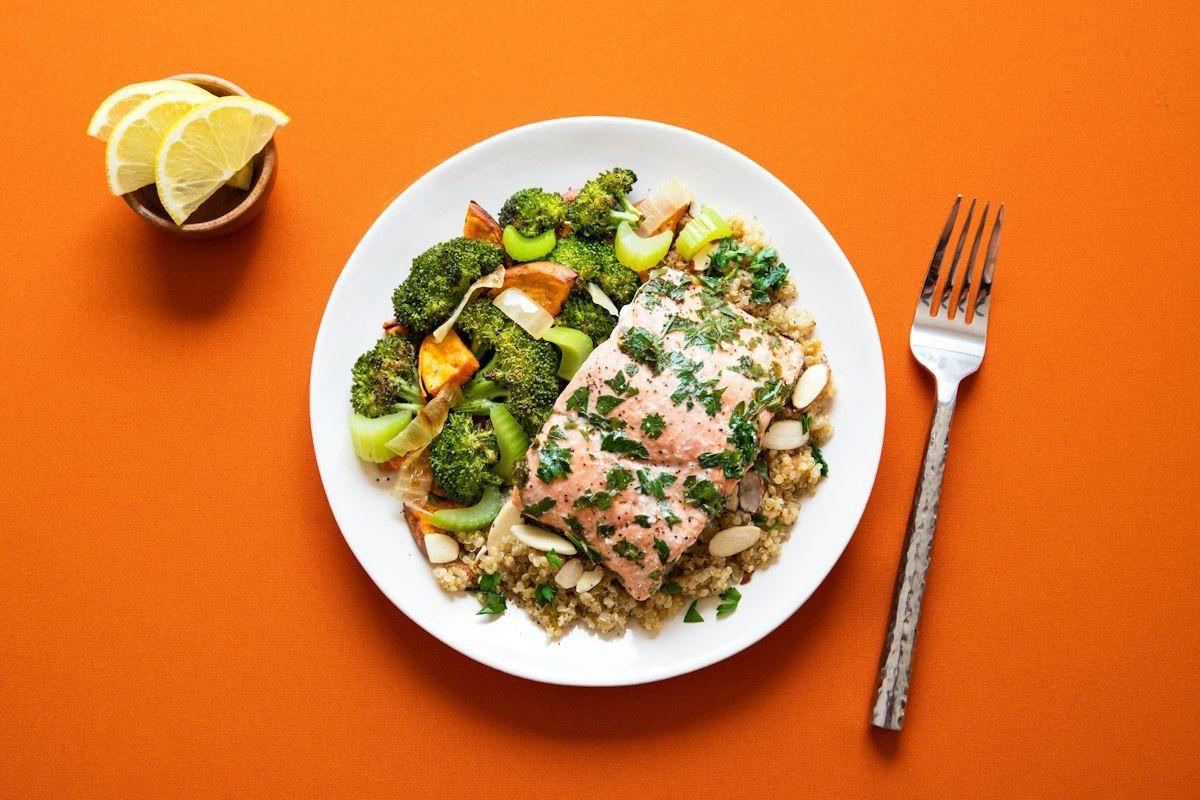
This is the most important step. Your hair is built from protein. When your appetite is small, eat your protein first at every meal so it does not get crowded out.
Find your daily number. A common starting point is 0.7 grams of protein for each pound of your goal weight. If your goal weight is 150 pounds, that is about 105 grams a day. Your care team can help you set the right number for you.
Here is what about 105 grams a day can look like:
- Breakfast, 30 g: Greek yogurt and 2 eggs
- Lunch, 30 g: chicken salad and edamame
- Dinner, 30 g: salmon and lentils
- Snack, 15 g: cottage cheese or a protein shake
Easy protein foods
| Food | Amount | Protein |
|---|---|---|
| Chicken breast, cooked | 3 oz | 26 g |
| Salmon, cooked | 3 oz | 22 g |
| Greek yogurt, plain | 1 cup | 20 g |
| Tuna, canned | 3 oz | 20 g |
| Protein shake | 1 bottle | 20 to 30 g |
| Edamame, shelled | 1 cup | 18 g |
| Cottage cheese | ½ cup | 12 g |
| Eggs | 2 large | 12 g |
| Lentils, cooked | ½ cup | 9 g |
| String cheese | 1 stick | 7 g |
Amounts are close estimates. Check the label for exact numbers. On low-appetite days, a protein shake counts.
2. Do not skip meals: 3 meals a day, even small ones
A GLP-1 can make it easy to forget to eat. But going all day on a few bites tells your body food is scarce, and that is exactly the kind of stress that triggers shedding. Small meals count. Skipped meals do not.
- Eat on a schedule, not on hunger. Your hunger cues are quieter now. Set phone reminders for meals.
- Think small and often. Three small meals plus a snack is easier than two big ones.
- Have a backup. Keep a protein shake, Greek yogurt or cheese stick on hand for days you cannot face a meal.
- Do not drink your meals away. Coffee and water fill you up but do not feed your hair.
3. Do not skip key nutrients: a daily multivitamin
When you eat less, it is easy to come up short on the vitamins and minerals hair needs to grow. A daily multivitamin is a simple safety net. Eat a variety of foods when you can.
| Nutrient | Why it matters | Find it in |
|---|---|---|
| Iron | Low iron is a common cause of shedding in women. | Red meat, chicken, beans, lentils, spinach, fortified cereal |
| Vitamin D | Many adults run low, especially in winter. | Salmon, eggs, fortified milk, sunlight |
| Zinc | Helps build and repair hair tissue. | Beef, shellfish, pumpkin seeds, chickpeas |
| Vitamin B12 | Can run low with metformin or a vegetarian diet. | Meat, fish, eggs, dairy, fortified foods |
| Omega-3s | Support a healthy scalp. | Salmon, sardines, walnuts, chia seeds |
- More is not better. Too much vitamin A or selenium can actually cause hair loss. Only take extra iron if a blood test shows you need it.
- About biotin: it rarely helps unless you are low, which is uncommon. It can also throw off lab tests, including thyroid and heart tests. If you take it, tell your care team before any blood work.
Part 4: Treatment
Still shedding? Treatment is a last step. Most telogen effluvium gets better on its own, without any treatment. Start with the basics above. Treatment may be worth a look if shedding lasts longer than 6 months, your hair stays thin after the shedding stops, or the shedding has made an older thinning pattern easier to see.
The main treatment is minoxidil. It helps hairs stay in their growing phase longer and grow thicker. It comes as a liquid or foam you put on your scalp, or as a low-dose pill.
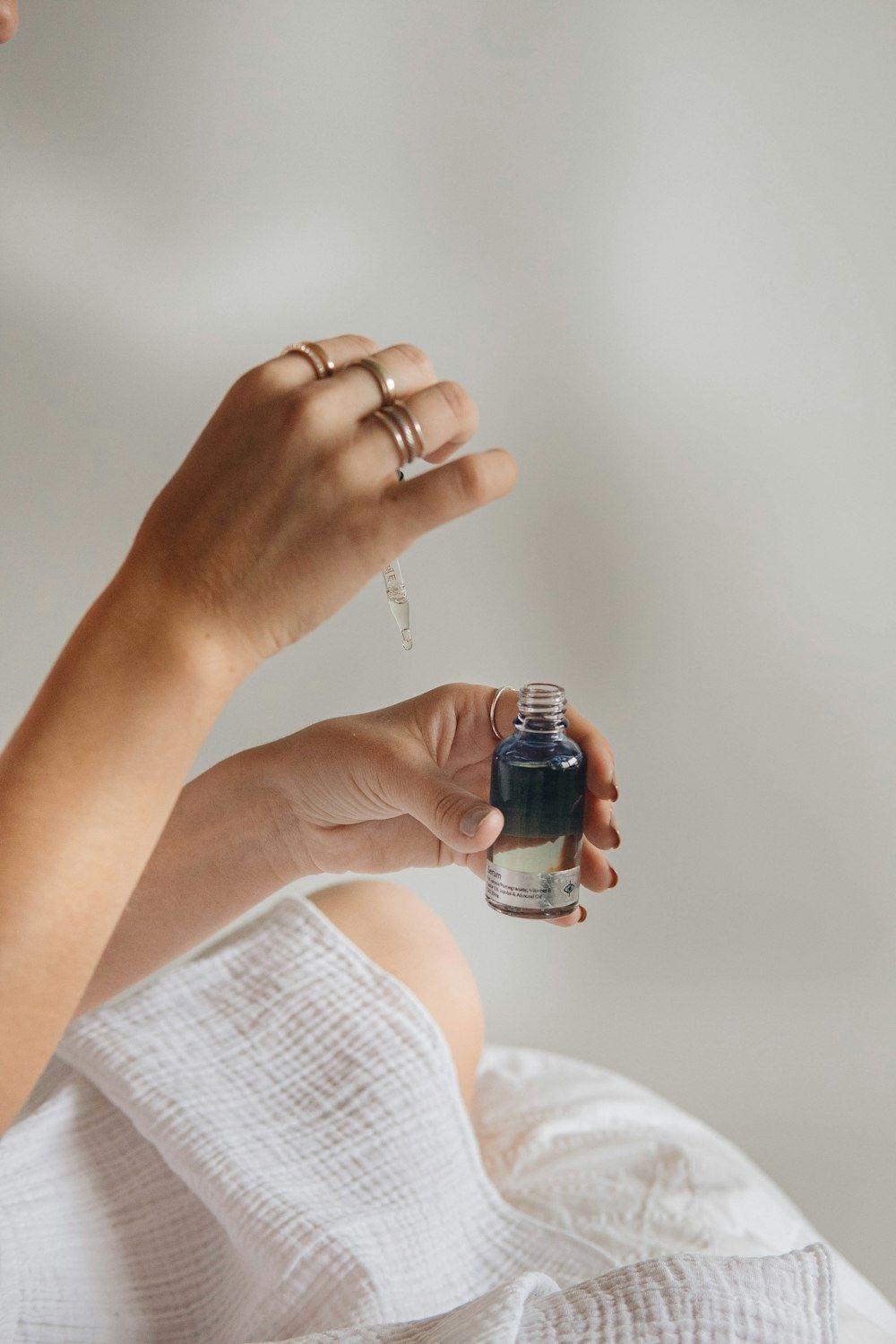
A. Over-the-counter minoxidil
The easiest place to start. No prescription needed. You apply it to a dry scalp, not your hair, and leave it on. It only works while you keep using it.
Minoxidil 5% foam (topical foam), a good first choice. Look for Women's Rogaine 5% Foam, Men's Rogaine Foam or store brand "minoxidil 5% foam."
- How to use: women use half a capful once a day. Men use half a capful twice a day. The foam dries fast and is less likely to irritate your scalp.
- Results: less shedding in 2 to 4 months. New growth in 4 to 6 months.
- Watch for: itchy or flaky scalp. Fine hair on your forehead or cheeks if it drips.
Minoxidil 2% or 5% solution (topical liquid). Look for Women's Rogaine 2%, Men's Rogaine 5% solution or store brand "minoxidil topical solution."
- How to use: a liquid with a dropper. Usually 1 mL twice a day. Some people find it greasier and more irritating than the foam.
- Results: same as the foam. Give it at least 4 to 6 months.
- Tip: apply it at least 2 to 4 hours before bed so it dries and does not rub onto your face.
B. Oral minoxidil (prescription), available through Belle
Minoxidil was first made as a blood pressure pill. At a much lower dose, a small daily pill can help hair grow across the whole scalp. Using it for hair is off-label, which means it is a common, studied use that is not on the official label. It needs a prescription and a conversation with your clinician.
- Dose: your provider sets the dose that is right for you. Doses for hair are much lower than doses for blood pressure, and your provider starts low.
- Results: less shedding by about 3 months. Fuller hair at 6 months. Best results around 12 months. Results vary and are not guaranteed.
- Most common side effect: extra hair on the face or body, in about 1 in 7 people.
- Less common: lightheadedness, fast heartbeat, headache, swelling in the ankles.
- Do not use both: oral and topical minoxidil are not used together.
Foam or liquid vs. pill at a glance
| Over the counter (foam or liquid) | Oral (pill) | |
|---|---|---|
| Prescription? | No | Yes |
| How often | 1 to 2 times a day | Once a day |
| Main downside | Daily mess, scalp itch | Body hair, dizziness, swelling |
| Best for | Trying first | When topicals do not help or irritate your scalp |
Oral minoxidil may be a good fit if you
- Are a healthy adult with normal blood pressure
- Have shedding or thinning that has lasted past 6 months
- Tried topical minoxidil and it did not help or irritated your scalp
- Would rather take a pill than apply something every day
Learn more: What is oral minoxidil and how does it work? and Oral minoxidil side effects and what's normal. To see if it is right for you, start the oral minoxidil screening.
Putting it together: a simple plan
Move to the next step only if the one before it has not helped. This is a general plan. Your care team may give you a plan that fits you better.
- From day one: protect your hair early. 25 to 30 grams of protein at each meal, no skipped meals, and a daily multivitamin.
- Months 2 to 6: ride out the wave. Shedding is expected. Keep up the basics. If it is heavy, ask your care team about labs.
- Past 6 months: add minoxidil foam. Start an over-the-counter 5% foam. Give it at least 4 to 6 months.
- Still thinning: ask about oral minoxidil. Talk with your Belle care team about whether a low-dose pill is right for you.
Part 5: When to get help
Shedding from a GLP-1 is not dangerous, but it can be upsetting, and some hair loss has other causes. Do not stop your GLP-1 on your own. Your care team may be able to slow your dose increases or check for other causes.
Message your Belle care team if
- Shedding has lasted more than 6 months, or keeps getting worse.
- You are losing weight very fast, or you cannot eat enough to reach your protein goal.
- You want lab work to check iron, vitamin D, B12, zinc or thyroid.
- You want to try oral minoxidil.
- You take blood pressure medicine and are thinking about oral minoxidil.
Need to reach us? See how to contact Belle.
Related guides
- Losing weight slowly on a GLP-1: why it happens and what helps
- Nausea on a GLP-1: why it happens and what helps
- Constipation on a GLP-1: why it happens and what helps
- Heartburn and acid reflux on a GLP-1: why it happens and what helps
- Injection site reactions on a GLP-1: what is normal and what helps
- Weight loss plateaus on a GLP-1: why they happen and what helps
- Keeping weight off on a GLP-1: your maintenance guide
More in GLP-1
- Heartburn and acid reflux on a GLP-1: why it happens and what helps
- Injection site reactions on a GLP-1: what is normal and what helps
- Keeping weight off on a GLP-1: your maintenance guide
- Losing weight slowly on a GLP-1: why it happens and what helps